
Have you ever wondered why your daily horoscope seems to speak directly to you, or why certain zodiac signs clash while others click effortlessly? Horoscope astrology isn’t just about casual readings in magazines—it’s a profound system that has guided humanity for millennia, offering insights into personality, relationships, career paths, and life’s twists and turns. As a seasoned astrologer with over 15 years of experience interpreting birth charts for clients worldwide, I’ve seen how understanding your horoscope can empower you to make informed decisions and embrace your true potential. In this comprehensive guide, we’ll demystify horoscope astrology, from its ancient roots to practical applications, ensuring you have all the tools to navigate the cosmos with confidence.
What Is Horoscope Astrology?
At its core, horoscope astrology is the study of how celestial bodies—planets, stars, and their movements—influence human affairs and natural phenomena. A horoscope is essentially a snapshot of the sky at a specific moment, most commonly your birth, mapping the positions of the Sun, Moon, and planets relative to the Earth. This map, known as a natal or birth chart, serves as a personalized blueprint for your life.
Unlike popular misconceptions, horoscope astrology goes beyond your Sun sign (the zodiac position of the Sun at birth). It incorporates LSI elements like Moon signs for emotions, rising signs (ascendant) for outward persona, and planetary transits for ongoing life events. Practitioners use this to provide daily, weekly, or monthly predictions, helping you align with cosmic energies. For instance, during a Mercury retrograde, communication mishaps are common, but knowing this allows proactive adjustments.
The History of Horoscope Astrology
Horoscope astrology traces back over 2,000 years to ancient Babylon around 2000 BCE, where priests observed planetary patterns to predict events for kings. This evolved into Hellenistic astrology in Greece, popularized by figures like Ptolemy in his work Tetrabiblos, which laid the foundation for Western astrology.
In real-world experience, a Leo Sun with a Pisces Moon might be outwardly confident but inwardly sensitive—highlighting why full charts matter.
Planets in Astrology: Symbols and Influences
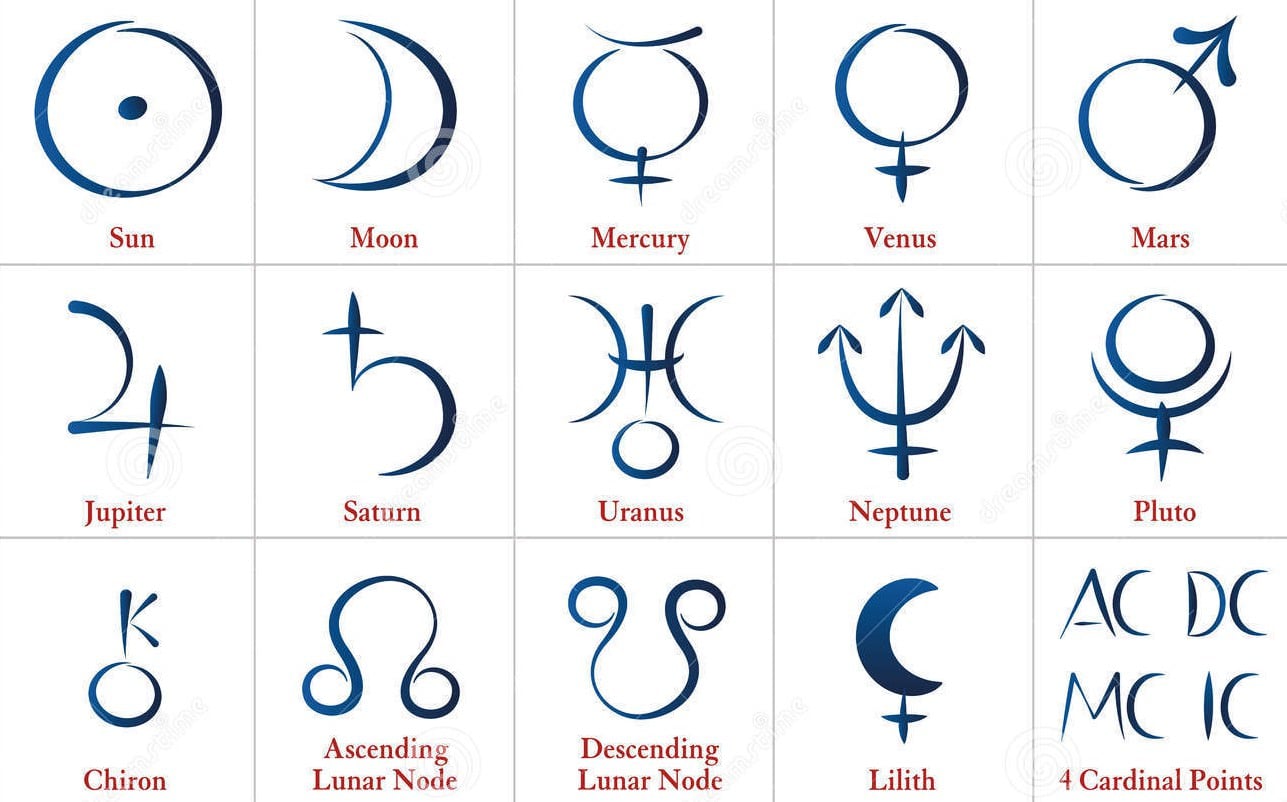
Planets represent core drives. The Sun symbolizes ego and vitality, the Moon emotions and instincts. Personal planets (Mercury, Venus, Mars) govern communication, love, and action; social planets (Jupiter, Saturn) expansion and structure; outer planets (Uranus, Neptune, Pluto) generational shifts.
Refer to this symbols chart for quick reference:
For example, Venus in Taurus craves stability in relationships, while Mars in Aries fuels assertiveness. Transits—current planetary movements—affect daily horoscopes, like Jupiter’s luck-bringing energy.
The 12 Houses: Areas of Life
Houses divide the chart into life sectors, starting from the ascendant.
Planets in houses amplify influences—e.g., Saturn in the 10th suggests career challenges but ultimate success through discipline.
Aspects: Planetary Relationships
Aspects are angles between planets, indicating harmony or tension. Major ones include:
- Conjunction (0°): Intensified energy
- Sextile (60°): Opportunities
- Square (90°): Challenges
- Trine (120°): Ease
- Opposition (180°): Balance needed
A Sun-Moon trine fosters emotional harmony, while a square might cause inner conflict.
Your Birth Chart: The Personalized Horoscope
A birth chart is your unique horoscope, requiring birth date, time, and place. Tools like free online calculators generate it, plotting planets in signs and houses.
Here’s an example birth chart:

To read it:
- Identify your big three: Sun (core self), Moon (emotions), Rising (persona).
- Note planetary placements and aspects.
- Consider houses for context.